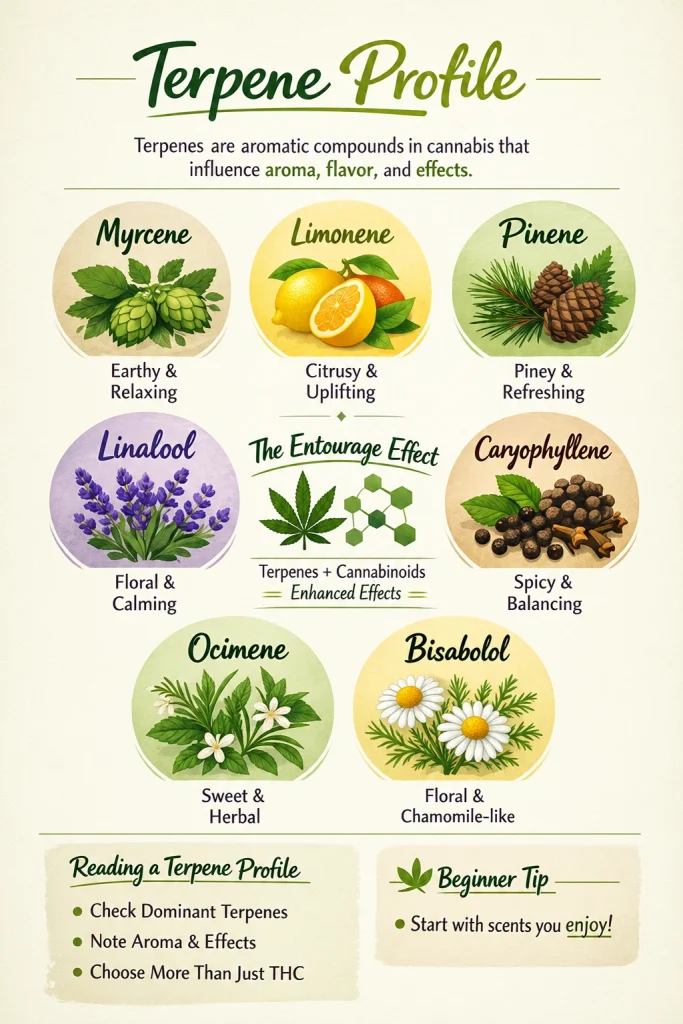
Terpenes are natural aromatic compounds found in cannabis and many other plants, including fruits, herbs, and flowers. They’re responsible for much of the smell and flavor of different cannabis strains—why one strain may smell citrusy while another is earthy, floral, or piney.
Beyond aroma and flavor, terpenes may contribute to the overall character of the cannabis experience. Different terpene profiles can help explain why two products with similar THC levels may have noticeably different aromas and experiences.
Why Terpenes Matter
Terpenes help influence:
How a strain smells and tastes
The overall aroma and character of a cannabis product
Whether a profile is more citrusy, earthy, floral, spicy, or herbal
The way cannabinoids and other cannabis compounds may interact as part of the overall experience
Terpenes are also commonly discussed in connection with the entourage effect, the idea that cannabinoids and other cannabis compounds may work together to influence the overall effects of cannabis.
Common Cannabis Terpenes
Myrcene
Aroma: Earthy, musky, herbal
Profile: Commonly associated with earthy and relaxing aromatic characteristics
Limonene
Aroma: Citrus, lemon, orange
Profile: Often associated with bright, fresh, and uplifting aromatic characteristics
Pinene
Aroma: Pine, fresh forest
Profile: Known for its fresh, woody, pine-like aroma
Linalool
Aroma: Floral, lavender
Profile: Commonly associated with soft, floral, and calming aromatic characteristics
Caryophyllene
Aroma: Spicy, peppery, woody
Profile: Known for its warm, peppery aromatic character
Ocimene
Aroma: Sweet, herbal, citrusy
Profile: Often found in profiles with fresh, fruity, herbal, and tropical aromatic notes
Bisabolol
Aroma: Floral, sweet, chamomile-like
Profile: Known for its soft, delicate, floral aroma with subtle herbal notes
Terpenes + Cannabinoids = The Entourage Effect
Terpenes don’t work in isolation. Cannabis contains a variety of compounds, including cannabinoids such as THC and CBD, as well as terpenes and other naturally occurring compounds.
The entourage effect refers to the theory that these compounds may interact with one another and contribute to the overall cannabis experience.
This is one reason two strains or products with similar THC levels can still have very different aromas, flavors, and experiences. Looking at the complete cannabinoid and terpene profile can provide more information than considering THC percentage alone.
How to Read a Terpene Profile
When viewing a product’s terpene profile, look for:
Dominant terpenes: Pay attention to the top 2–3 terpenes listed.
Aroma descriptions: Consider whether the profile matches the aromas and flavors you prefer.
Overall profile: Look at the combination of terpenes rather than focusing on a single compound.
Cannabinoid content: Consider the terpene profile alongside THC, CBD, and other available cannabinoid information.
Choosing cannabis based on its complete terpene and cannabinoid profile can help you better understand the aroma, flavor, and overall character of a product rather than relying only on its strain name or THC percentage.